Reflections on Competing at the IMA World Championship of Massage, Copenhagen 2026
One of the greatest gifts of competing at the World Championship of Massage was discovering the additional skills involved in bringing massage into a competition setting.
From the moment we arrived in Copenhagen, it was clear that the event was exceptionally well organised. The venue was easy to navigate, the timetable and competition schedule were clearly communicated, and the logistics of moving competitors and models through the event were thoughtfully managed. Once we understood the system, everything flowed smoothly.
What interested me most was the particular combination of skills the competition invited us to develop and demonstrate.
Over the past thirty years, I have shaped my work as a massage therapist through thousands of treatments with clients. In my clinic, every session begins with listening. I adapt to the individual in front of me, and the treatment develops through conversation, observation and touch.
The pace, boundaries, consent, quietness, smells and atmosphere of the room all contribute to the treatment. Over time, trust develops, safety deepens and a therapeutic relationship emerges. My work is grounded in responsiveness to the person and body I am meeting.
At the World Championship, these clinical skills remain important, but another layer is added.
You are presenting your work to judges and spectators within a fixed period of time. Alongside technical ability and responsiveness, the competition asks for creativity, clear transitions, visual flow, confidence, originality and an awareness of how the treatment appears from the outside.
These skills are not entirely separate from clinical massage. Many therapists already incorporate movement, rhythm, stretching and flowing transitions into their everyday work. Therapists trained in approaches such as table Thai massage, for example, may naturally bring a strong sense of choreography and whole-body movement to the treatment table.
For others, including me, learning how to make the work more visible and legible to judges is a new skill to develop. It is another layer placed on top of the clinical foundation.
The comparison that came to mind was Strictly Come Dancing.
Dancing at a wedding and dancing on Strictly Come Dancing are both dancing, but they are very different experiences. On Strictly, the dancing is choreographed and rehearsed, with careful attention given to intention, timing, presentation and the audience.
The World Championship of Massage felt similar. It is still massage, but it asks for additional layers of preparation, choreography and presentation.
It asks you to take your existing therapeutic abilities and present them within a competition format. Every movement can be seen. Every transition contributes to the overall flow. Creativity, confidence, rhythm and presentation are considered alongside technical skill and the quality of touch.
Watching the highest-scoring competitors made this very clear. They were excellent therapists who had also developed the particular skills required for competition. Their treatments had rhythm, continuity and memorable moments. They knew how to hold the attention of the judges and audience while remaining connected to their models.
At one point, Patricia Cassidy asked whether I felt disappointed after one of my competition treatments.
My answer surprised me.
No.
Standing there, I realised something important.
I know I am an excellent massage therapist.
I know the quality of the work I offer in my clinic. I know the depth of relationship I create with my clients, the safety I establish, the way I adapt to each individual body and the skills I have spent decades refining.
Competing in Copenhagen was asking for a different layer of skills.
That understanding was deeply empowering.
I returned home with a greater appreciation for my own work and genuine admiration for the competitors who have developed this additional layer of skill.
If I were to compete again, I would learn the language of competition more fluently. I would explore choreography and presentation while continuing to stay connected to responsiveness, consent and the individual body in front of me. I would think more creatively about how the qualities I value in my clinic work could become visible within a competition environment.
For anyone considering competing in the future, my advice would be to prepare specifically for the format.
Bring your clinical experience, quality of touch and ability to listen to the body. Then explore how rhythm, transitions, creativity, movement and presentation can be layered onto those foundations.
Some therapists will already have many of these skills through the modalities they practise. Others will discover a new area of learning.
The World Championship offers an opportunity to expand how we understand and express massage. Competition and clinic work can inform each other, with each bringing new possibilities into the same profession.
IMTA WEBSITE https://www.massageireland.org/Home
IMTA INSTAGRAM https://www.instagram.com/imtaireland/
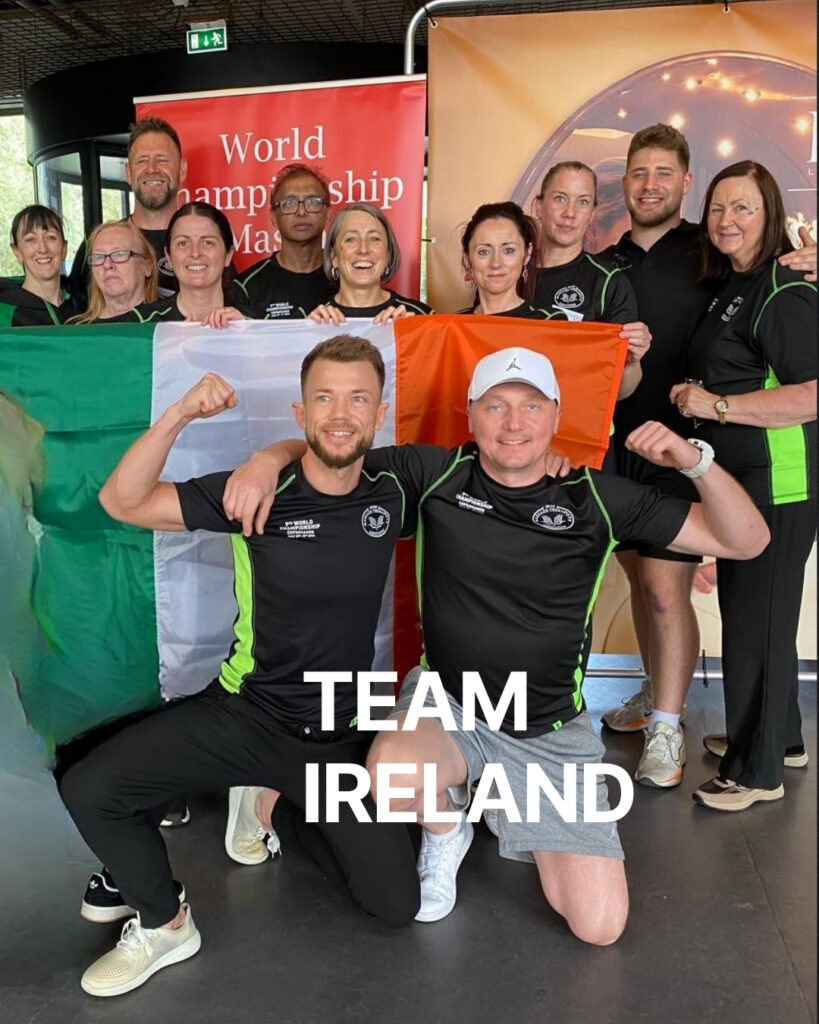
Team Ireland – More Than a Competition
I want to acknowledge the enormous amount of work that went into creating Team Ireland.
Representing your country doesn’t happen by accident. It takes months of planning, communication, logistics, and an extraordinary amount of volunteer time behind the scenes. While we, as competitors, naturally focus on preparing our treatments, there is a team of people quietly and steadily making sure everything else comes together.
From the moment I qualified in Athlone to the moment we arrived in Copenhagen, I felt part of something much bigger than an individual competition.
IMTA created a genuine sense of belonging.
Although we were competing in different categories and came from different clinics and backgrounds, we travelled as one team. There was a shared identity, a shared purpose, and a feeling that each person’s success mattered to all of us.
That spirit of inclusivity and community became one of the highlights of the experience.
The practical organisation also deserves recognition.
The accommodation was excellent, transport was coordinated seamlessly, and the taxis were organised and paid for without any fuss, allowing everyone to focus on why we were there. These details might seem small individually, but together they created a feeling that we were being genuinely looked after.
Receiving our Team Ireland hoodies and competition T-shirts was another special moment.
The moment we put them on at Dublin Airport, we instantly became a team. Wearing the same colours connected us immediately and made us recognisable wherever we went. There was a real sense of pride—not only in representing Ireland, but in representing one another.
Throughout the weekend, there was always someone available to answer a question, solve a problem, or simply check in to see how everyone was doing. That atmosphere of support allowed us to settle into what could otherwise have been a very intense and unfamiliar environment.
What also stood out was the generosity within the team itself.
There was an openness to sharing ideas, encouraging one another, celebrating each other’s successes, and offering reassurance and practical guidance. Several members of the team had competed last year, and their willingness to share what they had learned—the little details that only experience teaches—was invaluable. That informal mentoring helped all of us arrive better prepared and with greater confidence.
Even though medals were being awarded, it never felt like we were competing against one another. We were representing Ireland together.
Looking ahead, I think there is an exciting opportunity to build on what has already been created.
The medals matter, but perhaps an even greater legacy is the community that is being built around them—a community founded on generosity, shared learning, encouragement, and a collective commitment to excellence.
For that, I am deeply grateful.